
The Forth Point

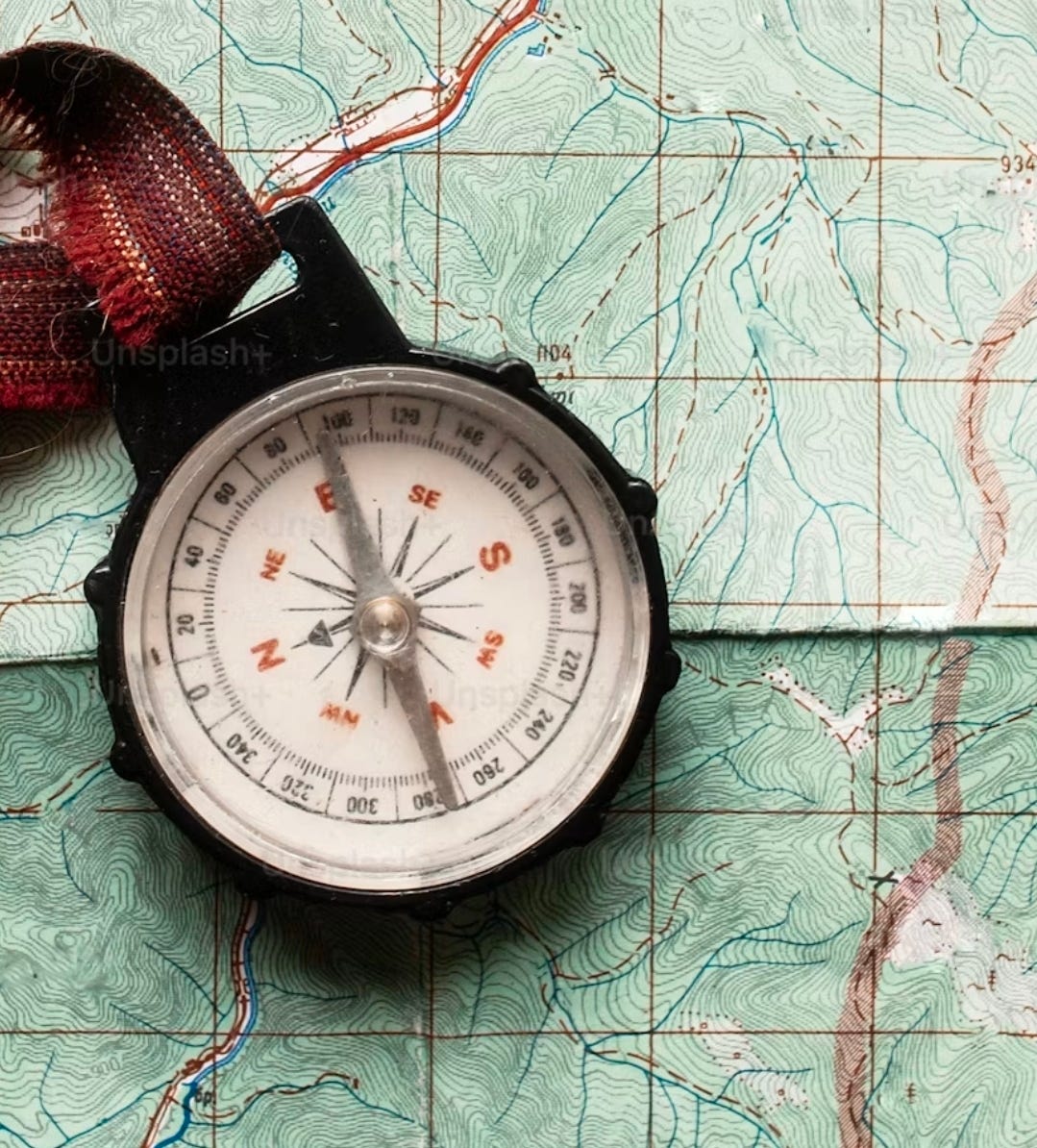
The map was wrong. Again.
Pemba noticed the eastern ridge had moved. Pemba had drawn this particular line four hundred and twelve times. She knew when Gangkhar Puensum was lying.
She erased the line. Redrew it three millimeters to the left.
The mountain did not thank her.
“Okay,” she said, to no one. “We’re doing this again.”
Her tea had gone cold. This happened every time she worked near the second ridge markers. She’d sit down, start drawing, and approximately forty minutes of her life would simply vanish. Her oolong was the evidence. Cold tea was the universe’s way of telling you that time had opinions about your location.
She added a note in the margin of the map:
Do not trust the eastern line. It moves. I don’t know why. I am a cartographer, not a philosopher.
She’d added variations of this note for the last eleven years.
The new tourist arrived at base camp. Mondays were known for equipment failures, altitude headaches, and reconsidering life choices. Pemba had guided sixty-three people through the lower trails of the forbidden mountain. Not one of them showed up on Monday with their boots properly laced and a smile. Who smiles on a Monday?
“I’m looking for a guide,” the tourist said. Her name was Karma, a Bhutanese name. A local. Rarer than you’d think.
Most people were international, carrying expensive cameras and the unshakeable confidence of someone who had read exactly three Wikipedia articles & knew it all. Karma had read considerably more. Probably had stories passed down as well.
“I know,” Pemba said.
Karma blinked. “You know I’m looking for a guide?”
“You’re standing at my door. There is a sign.” Pemba pointed at the sign. It said:
GUIDE. PEMBA DORJI. CERTIFIED. INSURED. WILL NOT TAKE YOU ABOVE THE SECOND RIDGE AFTER DARK. THIS IS NOT NEGOTIABLE.
“Ah,” Karma said. “What’s above the second ridge?”
“Mountains.”
“Right, but specifically…”
“Cold mountains,” Pemba said. “Dangerous mountains. Mountains that have caused me eleven years of personal and professional inconvenience. Tea?”
Pemba led Karma on the standard route the next morning. The lower eastern trail, past the prayer wheels and the stand of ancient junipers. Up to the first viewing platform where you could see the summit, if the clouds cooperated. The mountain cooperated today. It sat against the sky like it was posing. In her experience, the mountain was cooperative only when it wanted something. Suspicion coiled through Penba's thoughts.
Most tourists took hundreds of photod. Every prayer flag, stones, or slightly interesting rock formations, were documented by the visitors. Karma just looked with the focused expression of someone doing calculations.
“What do you know about the Three Brothers?” she asked.
Pemba kept walking. “They are in the name of the mountain. White Peak of the Three Spiritual Brothers. This is in every guidebook.”
“What do you know that isn’t in every guidebook?”
Pemba considered this odd question. The honest answer, everything. The honest answer was also not something she gave to tourists.
“I know the mountain is off-limits to climbers,” Karma said finally. “Out of respect for the spiritual significance of the region. The Bhutanese government made this decision in 1994.”
“Four expeditions attempted the summit. None succeeded.” Pemba paused. “None were stopped, exactly. They turned around. All of them. Different reasons each time. Equipment. Weather. Illness. One memorable incident involving a team member who became convinced he was thirty years younger and tried to descend using a technique he’d learned in the 1960s.” She stopped walking. “He was fine. Confused, but fine. He didn't remember the descent.”
Karma said nothing as she was gazed toward the eastern ridge.
The eastern ridge, Pemba noticed with the cold drop of recognition, was in the wrong place. Again.
That night, Pemba dreamed of Norbu.
She always dreamed of Norbu near the second ridge markers. This was another data point she had recorded in her map margins.
Norbu was a researcher. A folklorist, technically. He’d preferred narrative archaeologist. He’d had a theory about the mountain. Norbu explained it to her over three evenings and two bottles of Ara. In this exact spot.
His theory, the Three Brothers hadn’t broken time by accident. They’d broken it on purpose, trying to save something. One moment. A single specific afternoon that was passing and couldn’t be stopped. They’d built a machine to hold it. The way you cup water in your palms. The moment was preserved. But the Brothers realized they had no way to complete the process, because the machine required four points. They had only three.
“It’s waiting,” Norbu said, with the conviction of a man on his second bottle of ara. “Whatever they built is sitting up there, cycling. Trying to finish.”
“Cycling how?” Pemba asked.
“Pulling things in. Testing them. Releasing them.” He’d paused. “Or not.”
She guided him to the fold eleven years ago. She stood at the entrance to the cave the maps didn’t show. Watched him step through with the expression of a man arriving. His theory correct.
She waited fourteen hours.
In the dream, Norbu was always fine. He was just around a corner she couldn’t quite see, saying, ‘almost done, just a moment, I’ve almost got it.’
In the dream, she always believed him.
“I need to tell you something,” Pemba said at breakfast.
Karma looked up from her tea. She was, Pemba noted, drinking it while it was still hot. This was suspicious in a completely different direction.
“The mountain is not just a mountain,” Pemba said. “You know this. I can tell you know this because you were being pulled.”
Karma set down her cup. “Pulled?”
“The anomalies have been expanding for eleven years. Slow at first. Now…” Pemba spread her hands. “The eastern ridge moves. Rivers run the wrong direction for twenty minutes and then return to normal. Last spring, a herder’s son spent an afternoon in 1987 and came back with very strong opinions about a football match that hadn’t happened yet.” She paused. “His team won, for what it’s worth.”
“Eleven years,” Karmaa said.
“Yes.”
“What happened eleven years ago?”
Pemba picked up her own tea. Cold. She put it back down. “Someone went into the fold and didn’t come out. I believe the machine, or whatever the Brothers built, I believe it’s running out of time to find the fourth point. I believe that is why the anomalies are spreading.”
“You think I’m the fourth point.”
“I think the mountain thinks you’re the fourth point. The mountain has thought this before.” Pemba met her eyes. “I want to be honest with you. The last person I brought to the fold, I believed in them completely. I was certain. The machine rejected them, or accepted them, or something happened that I don’t have the right words for, and they didn’t come back.” She paused her speedy ramble. “I don’t know if that was a failure or a success. I have spent eleven years not knowing.”
The fire crackled. Outside, the mountain sat against the early sky, enormous and patient.
“What was his name?” Karma asked.
“Norbu.”
“The folklorist.” It wasn’t a question. “I read his papers. All seven of them. He disappeared before he could finish the eighth.”
Pemba stared at her.
“He wrote about the machine,” Karma said quietly. “About the moment the Brothers were trying to save. He’d identified it. A specific afternoon in approximately the ninth century.” She picked up her tea. “I’ve spent six years trying to understand what he figured out.”
The eastern ridge, visible through the window, sat exactly where it was supposed to be. For the first time in eleven years, it did not move.
Pemba understood. This was the mountain paying attention. “There is a cave,” she said. “The maps don’t show it. I have drawn four hundred and thirteen versions of this map, and it is not on any of them.” She stood up. “I will take you there.”
“Above the second ridge?”
“Above the second ridge.”
Karma looked at her. “Your sign says—”
“I wrote the sign,” Pemba said. “I know what it says.” She pulled on her coat. “It also says certified and insured. Context matters.”
They reached the cave by midday.
The entrance was narrow. Blue, colors of old glaciers. Prayer flags she had never planted flanked the opening, moving in a wind that wasn’t there.
Karma stood at the entrance. “What do I do?” she asked.
“I don’t know,” Pemba said. “The last time, I didn’t — I didn’t give any instructions. I just—” She stopped. “I just stood here.”
Karma nodded. She put her hand on the ice. The mountain made a sound. A reply. The sound a door makes when it has been locked for a very long time and someone finally has the right key. A sigh of relief perhaps.
Karma looked back at her. “He’s in there,” she said. “I think I can…”
“Just go.”
“You could come.”
“No,” Pemba said. “I couldn’t.”
She knew this for eleven years. The cave wasn’t for her. Her job was to be the map. Her job was the approach. Her job was to stand at the threshold with cold tea and wait.
Karma stepped inside.
The light changed. The eastern ridge sat exactly where it was supposed to be.
Pemba stood at the entrance. She pondered cold tea and wrong maps. Eleven years of wondering. What moment was time broken for here?
She pulled out her notebook.
She drew the eastern ridge exactly where it stood. This time, she thought, she might finally have it right. Her tea was hot.
Written for Bradley Ramsey Power Up Prompt.
There's a real sadness and uncertainty here, but it's not maudlin. Maybe it's the sparseness or directness of their dialogue, or the narration itself.