
The Marsh Remembers
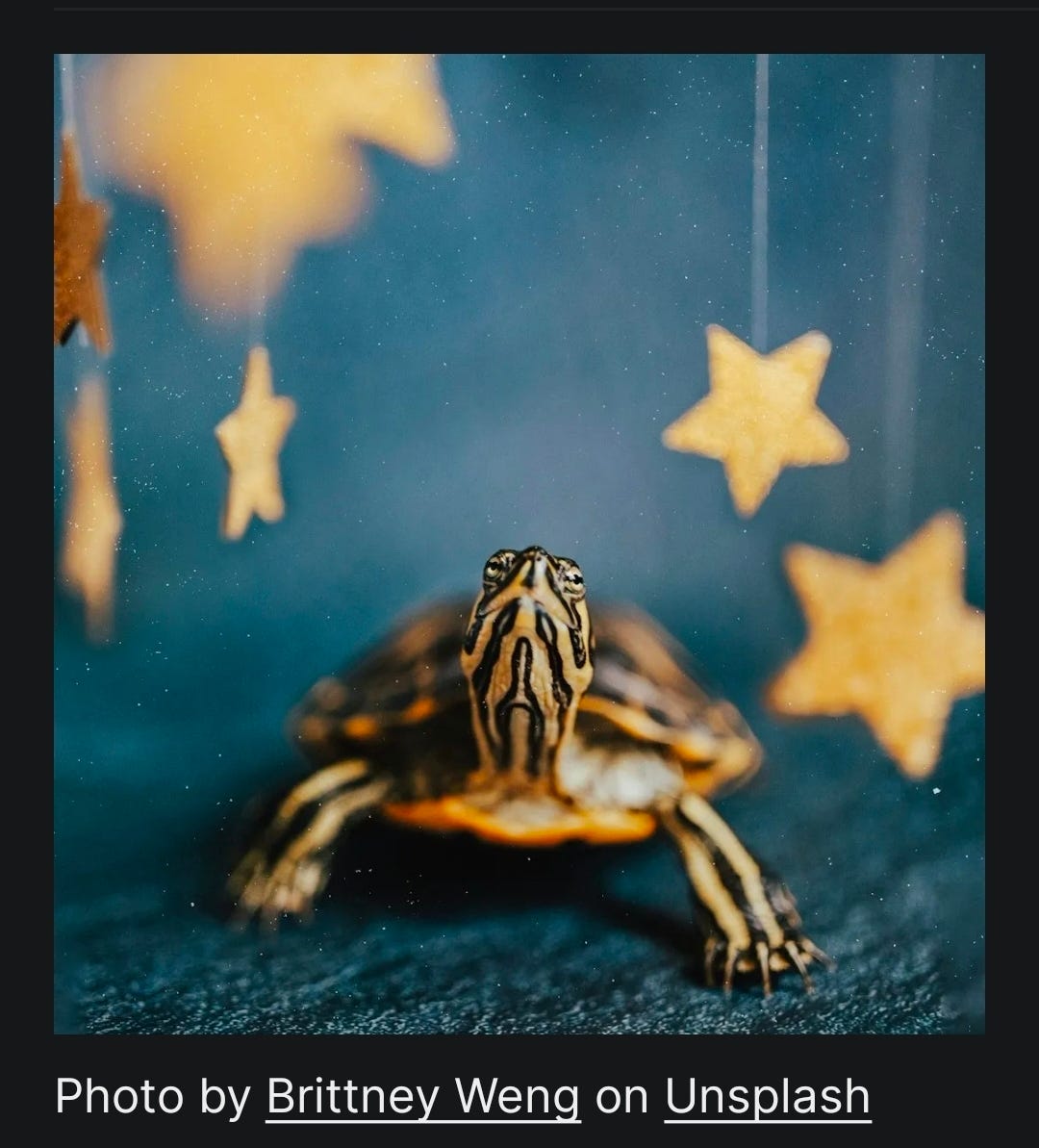
A 🐢 prompt

The water remembered what the city forgot.
Just outside the city, where the highway lifted itself onto concrete stilts and arched over a dark expanse of swamp, drivers pressed their windows shut. They had learned, without being taught, that this was a place to pass through quickly. A frequency of grief the body sensed before the mind could name it.
Below the overpass, the marsh lay in the slow work of forgetting. Oil-dark water filled the ruts where rice once grew in golden, whispering rows. The reeds yellowed at their tips and bent toward the surface as though trying to drink themselves back to life. A silver light moved beneath the water.
The marsh was not dead. It was trying to remember how to be alive.
Sefa pulled her Suburu over.
She was three hours into a drive that should have taken one. The back of her neck tight since morning. The radio losing signal and the city’s last billboard shrunk in her mirror. Hazard lights blinking orange into the dusk. She sat for a moment with her hands still on the wheel, listening to the tick of the cooling engine.
Then she got out.
The wind off the swamp hit her first. Wet earth and something faintly sweet beneath it. Like rain on warm stone. She walked to the railing and looked down.
The silver light.
She watched it move. Slow, circling. A strange certainty that it was aware of her watching. The way a sleeping person shifts when you enter the room. Some wordless acknowledgment passing between two beings who share space.
Below her, a single reed stood perfectly straight amid the bowed and broken others. Its surface caught the last of the daylight.
Sefa climbed over the railing.
The mud received her shoes with a sound like a soft word spoken in a language she’d once known. She steadied herself against a concrete pylon. Her hand coming away filmed with something dark and mineral. The highway noise above her was muffled now.
She waded toward the straight reed.
With each step, her senses sharpened. The water was cold against her ankles, then her shins. April-cold. The cold of things that had waited a long time. Somewhere to her left, she heard a frog attempt a single note and fall silent.
The silver light drifted toward her through the black water. It was tiny luminescent blooms. Slow and purposeful. Collecting around the base of the upright reed as though convening.
She crouched down.
The mud held the shapes of old furrows. Rice fields, she realized. Her fingers found the ridge of one and followed it, and the ridge was still perfectly formed beneath the silt, patient as a buried road. Someone had built this place. Tended it for generations with the kind of love that reshapes the earth and leaves its handprint in the soil forever. The land had held the shape of them long after they were gone.
Beneath the water, the silver light pulsed.
Sefa felt somewhere between her sternum and her spine ~ a sound below sound. A pressure that resolved, after a moment, into something almost like language. Not words. The emotional architecture that holds words up. Grief, yes. Beneath the grief: patience. Beneath the patience, pressing upward the way green shoots press through pavement cracks: insistence.
The marsh was not asking for anything.
It was simply refused to be finished.
Far above, in a cold so absolute it had no analogy on Earth, Nabu pressed his eye to the surface of the ice.
He watched the swamp for decades, as humans measured time. A brief ache in the long chronicle he kept. He had watched the highway come. The people scatter. The water darken. He had written it all in the Tablets. He was Scribe of the Gods, not their mercy. He could record. He could nudge the weight of a moment without tipping it. He could not restore.
Only human hands could restore.
He watched the woman crouch in the water. He had not sent her here. He had sent the silver light a little brighter tonight. Let the marsh speak at a frequency that carried farther than usual. Leaned the celestial corridor open just another degree. The planets did the rest. The woman did the rest.
He dipped his stylus and began to write.
Sefa stayed until the stars came out.
She had meetings and a bag still packed in her car and a life arranged in the city around her reliable presence. The cold water around her legs ceased to feel like cold and began to feel like something else entirely. Being held, like the particular sensation of lying in grass on a hot day when the earth’s temperature finally matches your own and the boundary between body and ground softens.
She found the old channel almost by feel, following the ridge of the furrow with her fingertips through the dark water. It ran deeper than the surrounding marsh, clearer. She could feel the current in it — faint but real, moving water toward some still-living outlet. The land had kept this, too. This small arterial intention.
The straight reed cast a long shadow in the starlight.
Around it, other reeds began to lift. Slowly, the way a person straightens when they finally hear their name called. One, then three, then seven. A small audience of yellow-green stalks rising from their bent and grieving postures to stand in the dark water with a new improbability.
The frog tried its note again. This time it held.
Another answered from the far edge of the swamp. Then there were three voices and then many. The sound rose up through the highway noise like smoke through rain, and Sefa knelt in the black water with her hands in the mud and felt something she could not have named if she’d tried. Emotion for which her language had not yet made a word. It lived in the space between grief and gratitude.
The silver light gathered around her hands.
She came back the next weekend with her brother, who was a botanist and immediately wept.
She came back the weekend after with her brother and two of his colleagues and a woman from the city’s wetlands office who had been trying for six years to get funding for exactly this kind of assessment.
The records they needed turned out to exist. Old astrological documents, agricultural maps, oral histories recorded in a university archive and largely unread. The shape of the rice fields was still there in the earth, waiting. The channel still ran. The water, tested and retested, was recoverable.
Nabu finished his entry as Mercury tilted away from Earth and the celestial corridor began its slow closure. Six more millennia before it would open again. He reviewed what he had written. The silver light returning. The reeds lifting. A woman in cold water, hands pressed to the memory of a field.
One person stopped, he wrote. That was enough to begin.
The light reflected in the water.
The water held it gently.
The marsh breathed.
Written for Turtles of Alchemy Prompt

This is beautiful. Curious, did you win your writing contest? I didn't get an email for it.